
COD wastewater can originate from a wide range of industries, including food processing, chemical manufacturing, pharmaceuticals, textiles, and semiconductor production. Because COD represents a mixture of different organic compounds with varying biodegradability, effective treatment often requires a combination of physical, chemical, and biological technologies. Understanding COD characteristics is the first step toward selecting the most efficient and cost-effective treatment strategy.
Understanding Chemical Oxygen Demand
Chemical Oxygen Demand (COD) is one of the most critical water quality indicators in the water treatment industry, used to measure the concentration of organic pollutants in water. It represents the amount of oxygen consumed when strong oxidizing agents oxidize organic matter (and some inorganic reducible substances) in water under specified conditions, typically measured in mg/L (milligrams per liter).
Organic pollutants:
- Protein
- Fat
- Carbohydrates
- Organic solvents
- Photoresist residues (semiconductor industry)
Certain inorganic reducible substances:
- Nitrite
- Ferrous ion
- Sulfide
The Importance of Chemical Oxygen Demand in Wastewater Treatment
Chemical Oxygen Demand (COD) provides a rapid indication of the overall pollutant load in wastewater and serves as a fundamental parameter for assessing water quality. In practical engineering applications, COD is not only used for preliminary evaluation of wastewater pollution levels but also widely applied in process design, equipment selection, and operational control. For instance, COD concentration can help determine whether wastewater is suitable for biological treatment and whether additional pretreatment or advanced treatment processes are required. Simultaneously, trends in COD levels can reveal system operational conditions, such as fluctuations in influent load, biochemical system stability, and variations in treatment efficiency.
Application of COD in Wastewater Treatment
During wastewater treatment plant operation
Municipal wastewater
COD primarily reflects organic pollution load
Industrial wastewater
COD indicates pollution intensity and toxicity risk
High-end industries (e.g., semiconductors)
COD typically represents levels of refractory organic pollutants
How to treat COD wastewater?
First determine the source and structure of COD → Then select an appropriate combination of treatment processes. Because different types of COD (particulate, colloidal, dissolved, and refractory) require entirely different treatment approaches.
Physical-chemical pretreatment
Applicable to: Particulate COD, Colloidal COD, High-color wastewater
Coagulation & Flocculation: As discussed earlier, adding PAC (coagulant) and PAM (flocculant) causes minute particles to aggregate and settle.
Dissolved Air Flotation: Suitable for wastewater with high oil content or containing light suspended solids (e.g., food processing, textile dyeing effluent). Utilizes microbubbles to carry particles to the surface for skimming.
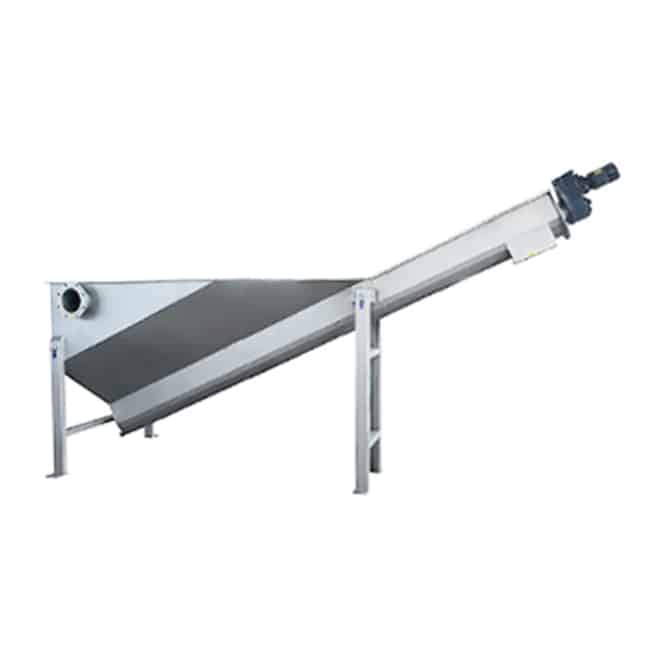
Grates and Sand Traps: Grit classifier intercept large debris to prevent clogging of downstream pumping equipment.
Biological Treatment Stage: Removal of Dissolved COD
Anaerobic biological treatment: Suitable for high-concentration wastewater (COD > 2000 mg/L).
- Features: No aeration required, energy-efficient, and produces biogas (methane). Common processes include UASB and IC reactors.
Aerobic biological treatment: Suitable for medium-to-low concentration wastewater or secondary treatment after anaerobic processes.
- Activated Sludge Process: Classic aeration tanks offer high efficiency but require extensive land area.
- MBBR (Moving Bed Biofilm Reactor): Incorporates suspended carriers to increase biomass, providing strong resistance to shock loads.
- MBR (Membrane Bioreactor): Replaces sedimentation tanks with membranes, delivering exceptionally high effluent quality suitable for direct reuse.
Advanced Treatment Stage: Removal of Refractory COD
If effluent from biochemical treatment still fails to meet standards (due to the presence of refractory “hard COD”), forced oxidation is required.
- Advanced Oxidation Processes (AOPs): Includes ozone oxidation, electro-chemical oxidation, photocatalytic oxidation, etc., suitable for highly toxic wastewater from chemical and pharmaceutical industries.
- Activated Carbon Adsorption: Utilizes the physical adsorption of residual organic matter by activated carbon’s micropores, often serving as the final safeguard for effluent quality.
Monitoring and Control of Cod Processing
| Technology | Advantages | Disadvantages | Application Scenarios |
| Potassium Dichromate Method (Online) | Consistent with National Standards (GB); Most authoritative and legally recognized. | Slow response (approx. 30-60 mins); High consumption of chemical reagents. | Environmental protection agency (EPA) networking; Final discharge outlets. |
| UV Absorption Method (UV254) | Extremely fast response (second-level); Reagent-free; Low maintenance requirements. | Susceptible to interference from turbidity; Requires building a correlation curve with COD. | Process monitoring; Early warning systems; Pre-treatment control. |
| TOC Conversion Method | High measurement precision; Relatively fast processing speed. | High equipment cost; Demanding maintenance and calibration requirements. | Pharmaceutical industry; High-purity water applications. |
Table of Monitoring and Control of Cod Processing
How do coagulants and flocculants reduce cod?
In wastewater treatment processes, coagulation and flocculation represent one of the most common and economical methods for reducing chemical oxygen demand (COD). Although coagulants and flocculants themselves do not directly decompose organic matter like advanced oxidation processes do, they effectively lower COD by removing colloidal particles, organic suspended solids, and some macromolecular dissolved organic matter from water.
From an engineering perspective, coagulation and flocculation typically serve as core pretreatment units. They reduce the operational load on subsequent biological systems, membrane systems, or advanced treatment units, thereby enhancing the overall stability and cost-effectiveness of the treatment system.
Summary
Effective COD wastewater treatment requires more than simply reducing pollutant concentration—it requires selecting the right combination of technologies based on wastewater characteristics, treatment goals, and regulatory requirements. By integrating pretreatment, biological treatment, advanced oxidation, and polishing processes, industries can achieve stable compliance while optimizing operational costs.
As a leading provider in the field of water treatment and fluid control, Kuosi offers a comprehensive portfolio of high-precision monitoring instruments and automated dosing systems.By integrating Kuosi’s advanced sensing technology with their robust chemical dosing solutions, facilities can achieve more stable effluent quality while significantly reducing reagent consumption and labor costs. Feel free to contact us to develop a professional solution!