
Food processing wastewater is rarely consistent. Flow, fat content, suspended solids, pH and organic loading can change between production shifts, cleaning cycles and product types.
For this reason, selecting a DAF wastewater treatment system for the food industry should not be based only on plant flow rate.
The first engineering question is whether the main pollutants are floatable or suspended, such as fats, oils and grease (FOG), proteins, fine food solids and chemically formed flocs. When these contaminants create a high load before biological treatment, dissolved air flotation (DAF) can provide an effective physicochemical pretreatment stage.
DAF should therefore be considered as part of the overall wastewater treatment process—not as a universal replacement for biological treatment.
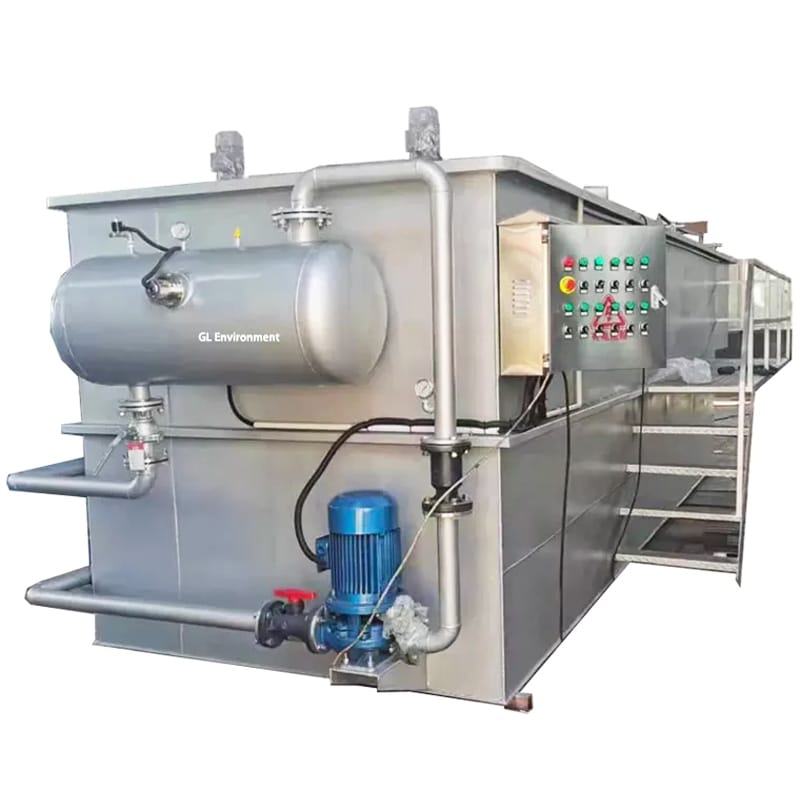
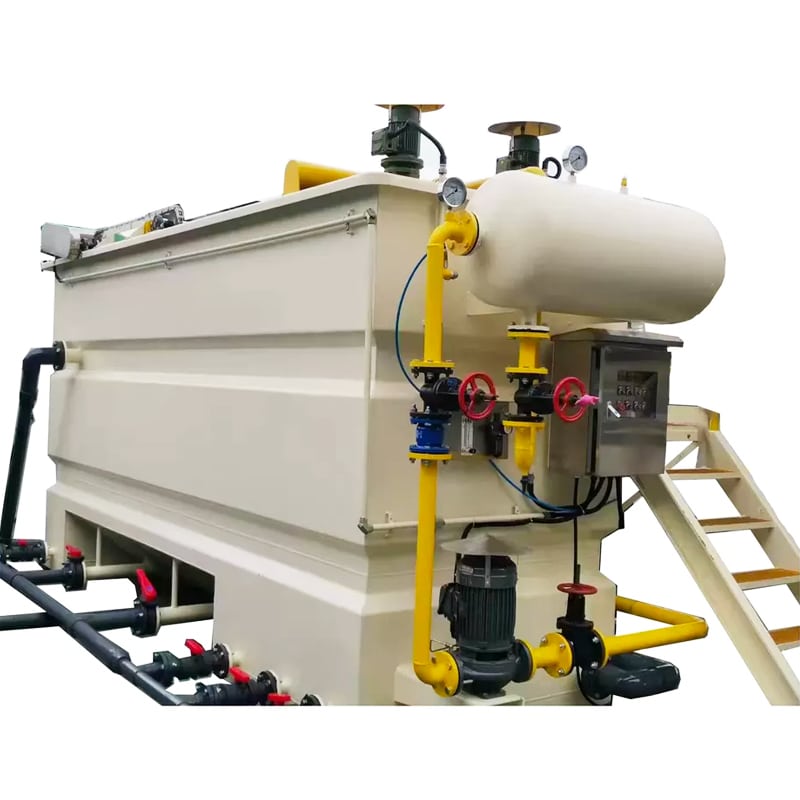
Why Food Industry Wastewater Requires DAF Treatment?
Food industry wastewater characteristics vary depending on production processes, but common pollutants include:
- Fat, oil and grease (FOG)
- Suspended solids (SS)
- Organic particles
- Protein residues
- High COD and BOD concentration
- Floating impurities
If these pollutants directly enter biological treatment tanks, they may cause:
- Excessive oxygen consumption
- Sludge bulking problems
- Increased biological load
- Higher operation costs
- Unstable wastewater discharge quality
DAF provides an effective pretreatment method by removing contaminants before downstream treatment.

How Does a DAF Wastewater Treatment System Work?
A typical food processing wastewater treatment line may be arranged as:
Screening → Equalization → pH / Chemical Conditioning → DAF → Biological Treatment → Polishing / Disinfection

A dissolved air flotation system uses microbubble technology to separate suspended pollutants from wastewater.
Working Process:
- Coagulation and flocculation
Chemical agents such as PAC or PAM can be added to wastewater to combine small particles into larger flocs.
- Dissolved air generation
A portion of treated water is pressurized with air. When pressure is released, microbubbles are generated.
- Bubble-particle attachment
The microbubbles attach to suspended solids, oil droplets and flocs.
- Floating separation
The bubble-solid complexes rise to the surface and form a floating sludge layer.
- Sludge scraping
A mechanical scraper removes the floating sludge into the sludge collection area.
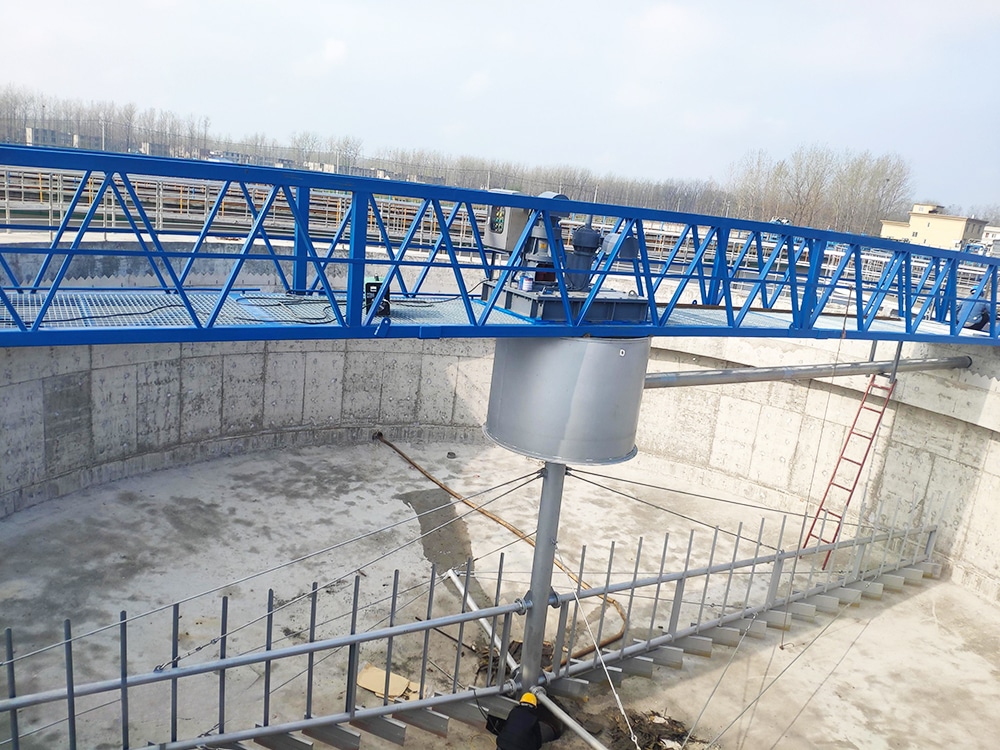
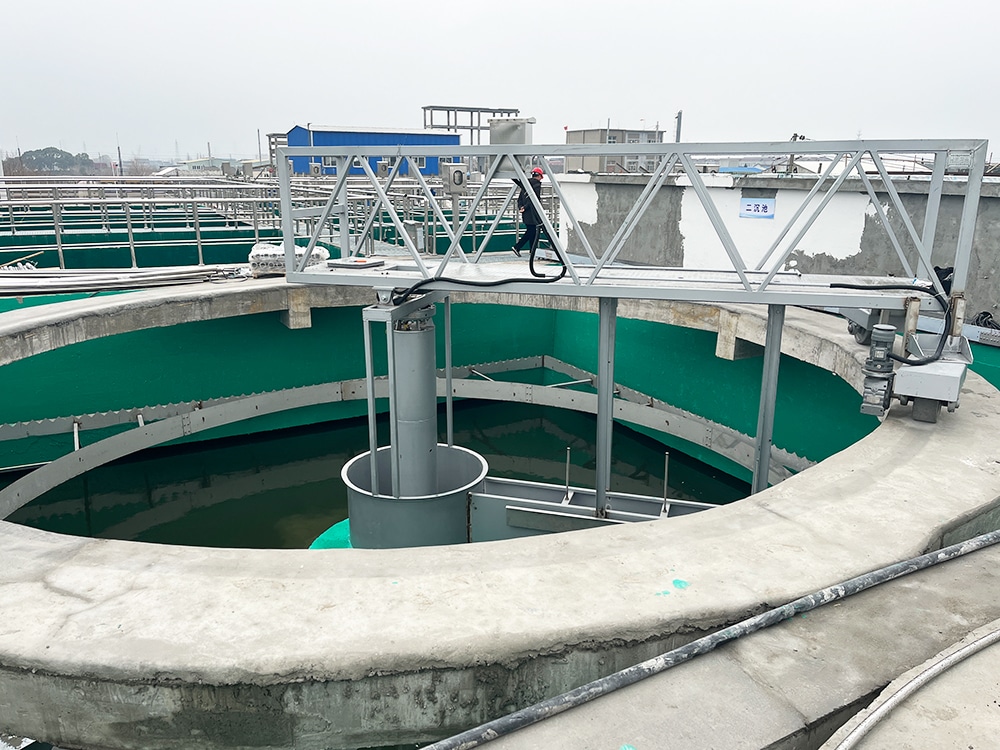
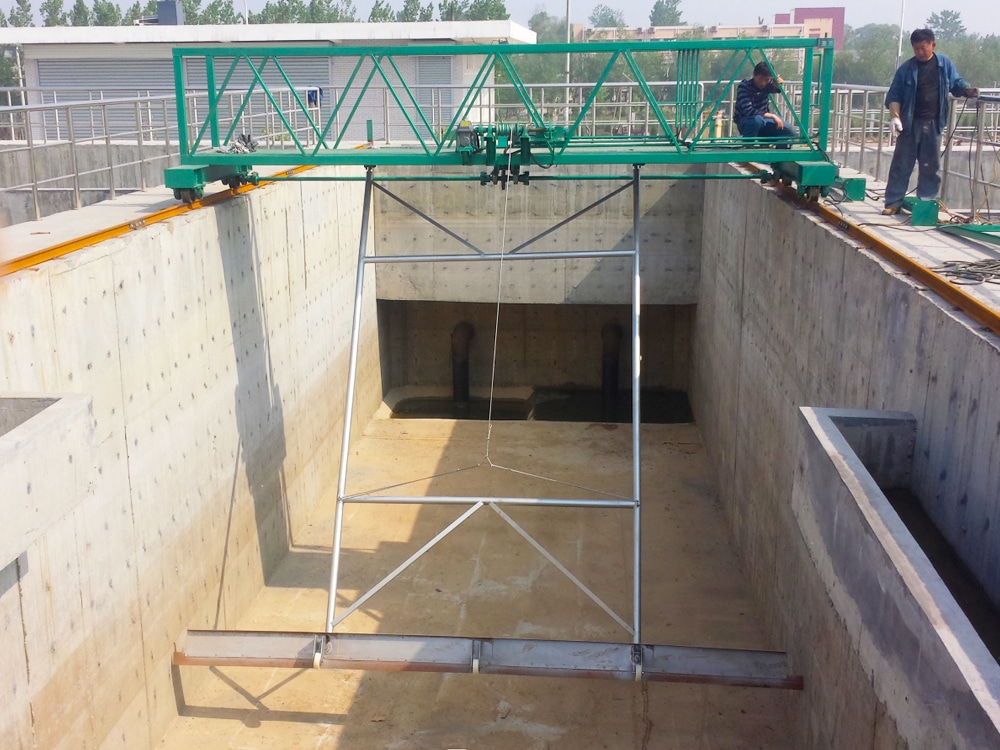
The clarified water is discharged for further biological treatment or reuse.

What Pollutants Can DAF Remove from Food Processing Wastewater?
DAF is particularly useful when wastewater contains pollutants that do not settle efficiently by gravity.
Typical targets include FOG, suspended food particles, protein-containing solids, fine suspended solids, colloidal material and flocs formed after chemical conditioning.
COD and BOD may also decrease after DAF when part of the organic load is associated with the separated fats and suspended solids. However, DAF does not remove all dissolved COD or BOD.
This distinction is important when designing a food wastewater treatment plant. A high influent COD value alone does not mean that a larger DAF system will solve the treatment problem. Engineers must determine how much of that load is suspended, colloidal, emulsified or truly dissolved.
Advantages of DAF for Food Processing Wastewater Treatment
High Removal Efficiency of FOG and Suspended Solids
Food wastewater often contains large amounts of grease and floating particles. DAF technology is particularly suitable for removing pollutants with densities close to water.
Typical target pollutants:
- Oil and grease
- Suspended solids
- Fine particles
- Organic residues
Compact Equipment Design
Compared with traditional sedimentation tanks, DAF systems require less installation space.
This makes them suitable for:
- Food factories with limited land area
- Existing wastewater treatment plant upgrades
- Industrial expansion projects
Stable Operation Under Variable Wastewater Conditions
Food production schedules often cause wastewater fluctuations.
KUOSI DAF systems can be customized according to:
- Flow rate (m³/h)
- Wastewater characteristics
- SS concentration
- COD loading
- Required treatment performance
Reduced Load on Biological Treatment
By removing grease and suspended solids before biological treatment, DAF helps:
- Improve biological system stability
- Reduce aeration energy consumption
- Extend equipment service life
- Lower sludge production
Food Wastewater Is Different for Each Industry
Meat and Poultry Processing Wastewater
Meat and poultry plants can generate wastewater containing fats, proteins, blood-related organic matter and fine tissue solids. Production schedules and cleaning operations may also create large variations in flow and pollutant concentration.
DAF is commonly positioned after screening and equalization to separate fats and suspended solids before biological treatment.
For projects in the United States, wastewater engineers should also consider the applicable regulatory and discharge requirements for the specific facility. The U.S. EPA maintains industry-specific information for meat and poultry processing facilities.
Dairy Wastewater
Dairy wastewater may contain milk solids, proteins, fats and product losses from processing operations.
Cleaning cycles can also change wastewater pH and concentration over short periods. Therefore, equalization and controlled chemical conditioning are particularly important before DAF.
DAF can remove suspended and floatable material, while the remaining dissolved organic load usually needs to be considered in the downstream treatment design.
Beverage, Bakery and Other Food Manufacturing
Wastewater from beverage, bakery and similar food manufacturing processes may contain suspended ingredients but can also contain substantial dissolved organic matter such as sugars and other soluble compounds.
In these applications, DAF can remove suspended solids and chemically separable material, but it should not be expected to remove the entire soluble organic load.
This is one reason wastewater characterization should be completed before selecting equipment.
Chemical Conditioning Is Critical to DAF Performance
A DAF tank cannot compensate for poor coagulation and flocculation.
Chemical selection depends on the wastewater composition. Coagulants may be used to destabilize colloids, while polymer can help build flocs that can effectively attach to microbubbles.
KUOSI operating documentation specifically notes that optimum chemical dosage and flocculation conditions should be established through testing.
For a food processing project, a jar test or equivalent wastewater test should therefore evaluate chemical type, dosing rate, pH range, floc formation and flotation response.
An automatic dosing system can then prepare and meter the required chemicals according to the selected process configuration.
What Data Is Required to Size a Food Industry DAF System?
DAF equipment should not be selected from wastewater flow alone.
KUOSI normally needs the following project data before preparing an equipment selection or engineering proposal:
| Design Input | Recommended Unit | Why It Matters |
| Average wastewater flow | m³/h | Determines normal hydraulic load |
| Peak wastewater flow | m³/h | Checks peak operating conditions |
| Operating hours | h/day | Defines daily flow pattern |
| TSS | mg/L | Indicates suspended solids loading |
| FOG / oil & grease | mg/L | Important flotation design parameter |
| COD | mg/L | Indicates total organic loading |
| BOD | mg/L | Helps evaluate downstream biological load |
| pH | — | Important for chemical conditioning |
| Wastewater temperature | °C | Affects process and equipment conditions |
| Production process | — | Identifies likely pollutant sources |
| Existing treatment stages | — | Determines where DAF should be installed |
| Required outlet quality | mg/L | Defines treatment objective |
| Final discharge route | — | Helps determine downstream treatment needs |
KUOSI DAF Equipment Range
KUOSI product documentation lists DAF configurations covering approximately 3–300 m³/h, with typical operating pressure of 0.3–0.5 MPa. Final equipment selection should be based on wastewater loading and process requirements rather than nominal hydraulic capacity alone.
A complete food industry DAF project may also include upstream screening, equalization, pH adjustment, coagulant and polymer dosing, DAF separation and downstream sludge dewatering.
This modular approach allows the treatment line to be configured according to the actual wastewater rather than treating DAF as an isolated piece of equipment.
When Is DAF Not Enough?
DAF is primarily a solid-liquid and liquid-liquid separation process.
If the wastewater contains a large amount of dissolved biodegradable organic matter, ammonia, nitrogen, phosphorus or other dissolved contaminants, additional treatment stages may be required depending on the discharge target.
For many food processing WWTPs, DAF therefore performs an important pretreatment function: it removes FOG and suspended loading before the wastewater enters biological treatment.
This reduces unnecessary loading on downstream processes but does not replace the need to design those processes according to the actual effluent target.
How to Select a DAF System for a Food Processing Plant?
For EPC companies, plant engineers and industrial buyers, DAF selection should begin with wastewater data rather than equipment dimensions.
The key engineering questions are whether the target contaminants are suitable for flotation, how variable the wastewater is, whether chemical conditioning is required, what downstream treatment follows the DAF and how the generated sludge will be handled.
Pilot testing or jar testing may be appropriate when wastewater characteristics are uncertain or highly variable.
Once these conditions are defined, the DAF capacity, material configuration, chemical dosing system, control requirements and sludge treatment equipment can be selected as one integrated treatment solution.
Summary
DAF Wastewater Treatment for Food Industry is an efficient pretreatment solution designed to remove fat, oil, grease (FOG), suspended solids (SS), and organic pollutants from food processing wastewater. By using dissolved air flotation technology, microbubbles attach to pollutants and separate them from wastewater, reducing the load on downstream biological treatment systems.
KUOSI provides customized DAF wastewater treatment systems for food processing applications, including meat processing, dairy, beverage, and other industrial wastewater projects. With compact design, stable operation, and flexible configuration, KUOSI DAF systems help industries improve wastewater treatment efficiency, reduce operating costs, and achieve reliable wastewater management performance.
FAQ
Request a DAF Engineering Proposal
Food processing wastewater can vary significantly between meat processing, poultry, dairy, beverage, bakery and other manufacturing operations. For this reason, KUOSI recommends selecting a DAF system from actual wastewater conditions rather than flow rate alone.
Request a quotation for a DAF wastewater treatment system.
Send wastewater data for design, including flow rate, TSS, FOG, COD, BOD, pH and required outlet quality.
Contact for engineering solution if your project also requires screening, chemical dosing, sludge dewatering or integration with an existing WWTP.