
A screw press price cannot be evaluated correctly from machine size or sludge flow rate alone.
For wastewater treatment projects, buyers should compare three things separately:
equipment CAPEX, operating OPEX, and sludge disposal cost.
The quotation also needs to clarify whether the supplier is pricing only the screw press or a complete sludge dewatering package including polymer preparation, pumps, controls and cake handling equipment.
For an accurate KUOSI quotation, the most important design parameter is normally dry solids load (kg DS/h) rather than m³/h alone.
What Affects Screw Press Price?
There is no fixed universal screw press price because each sludge dewatering project has different process conditions. The main price factors include:

Treatment Capacity
Capacity is usually evaluated by:
- Sludge flow rate: m³/h
- Sludge solids concentration: %
- Dry solids load: kg DS/h
A small screw press for low-flow municipal or package wastewater systems costs less than a multi-shaft or larger-capacity unit for food processing, paper mill, or industrial sludge.
Sludge Type
Screw press selection depends strongly on sludge characteristics, such as:
- Municipal biological sludge
- DAF sludge
- Food processing sludge
- Paper mill sludge
- Chemical sludge
- Oily or mixed industrial sludge
Organic sludge is generally more suitable for screw press dewatering than dense inorganic sludge. For some inorganic sludge, a filter press may achieve a drier cake but with more batch operation and operator involvement.
Material of Construction
For standard municipal sludge, stainless steel contact parts may be sufficient. For corrosive industrial wastewater sludge, higher-grade stainless steel or special anti-corrosion design may be required.
Common material factors include:
- Frame material
- Screw shaft material
- Ring material
- Tank material
- Control cabinet protection level
- Chemical resistance requirements
Automation Level
A basic screw press may include local control, while a higher-specification system may include:
- PLC control
- Touchscreen HMI
- Automatic polymer dosing linkage
- Sludge feed pump control
- Wash water control
- Fault alarm
- Remote signal interface
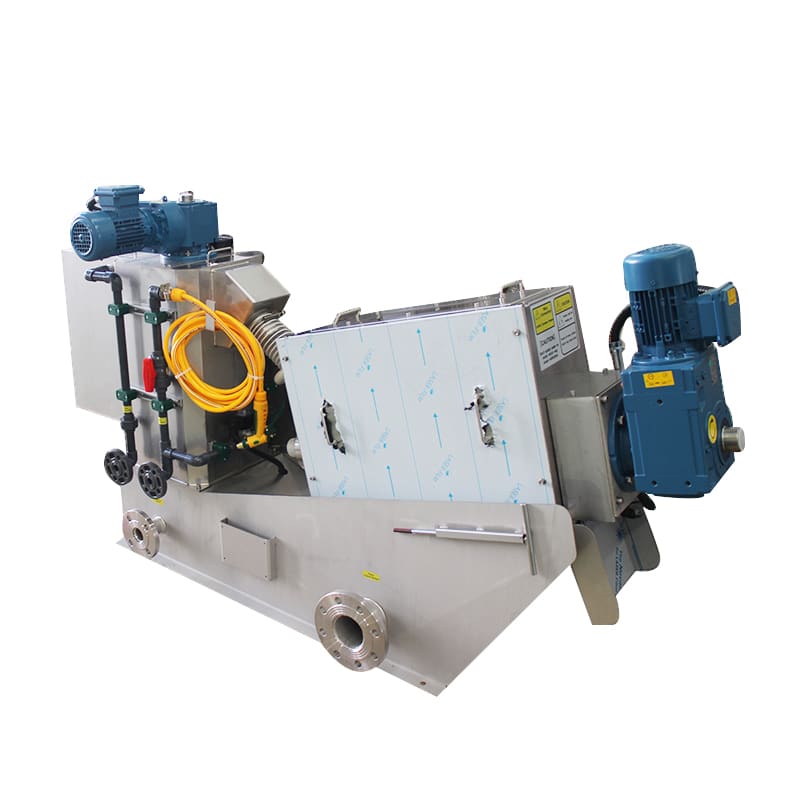
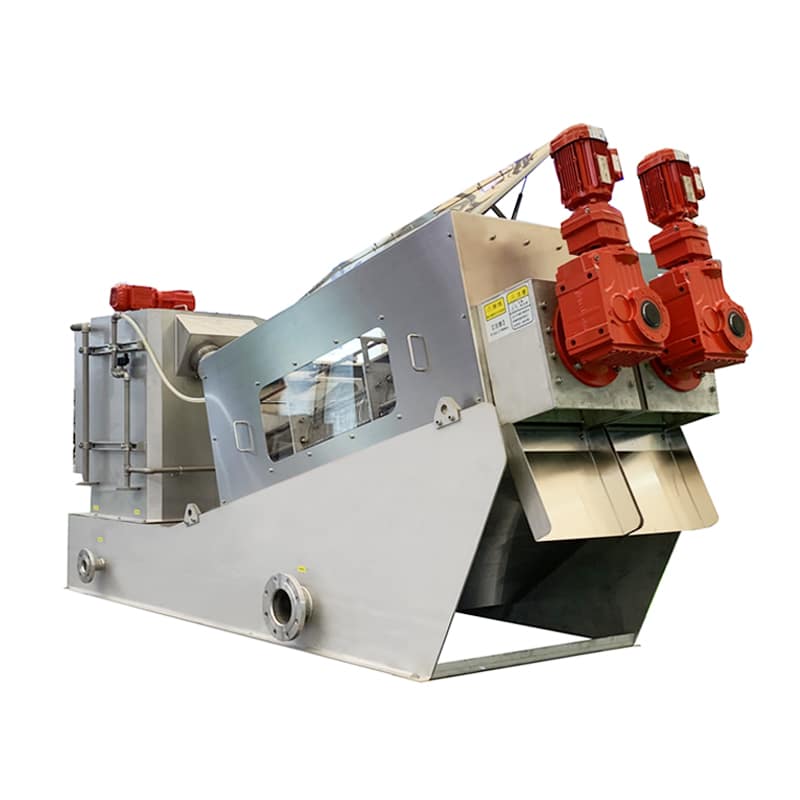
KUOSI screw press systems can be integrated with automatic control, flocculation, sludge thickening, dewatering, and filtrate collection functions.
Auxiliary Equipment
The screw press itself is not always the complete system. A full sludge dewatering package may include:
- Sludge feed pump
- Polymer preparation system
- Polymer dosing pump
- Flocculation tank
- Screw conveyor for cake discharge
- Control cabinet
- Piping and valves
- Platform or skid base
Polymer preparation is especially important because sludge usually requires flocculation before mechanical dewatering. KUOSI polymer preparation systems are designed for liquid or powder polymer preparation and dosing with a compact automated structure.
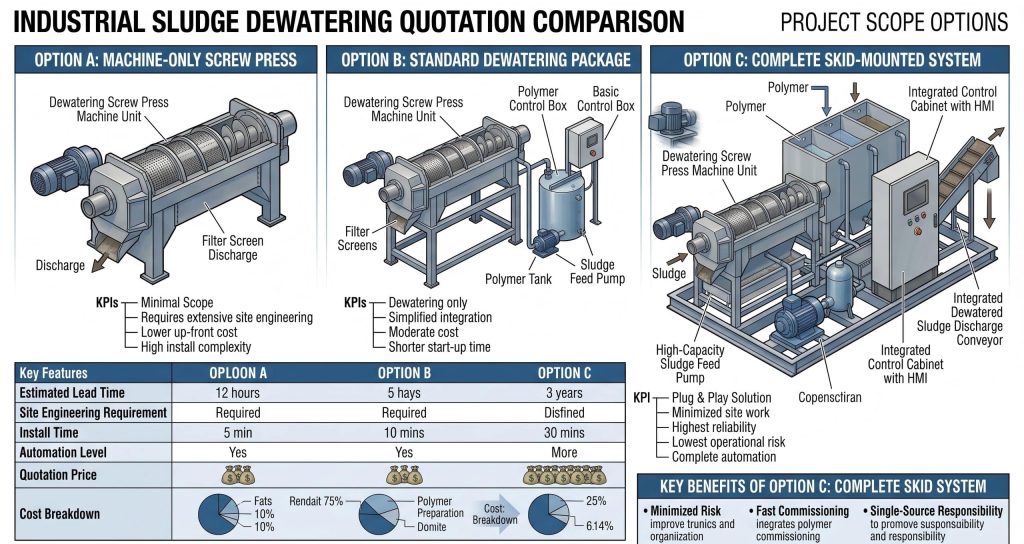
Two screw press quotations with similar nominal capacity may represent very different scopes of supply.
Before comparing prices, check what is actually included.
| Quotation Level | Typical Scope | Suitable For |
| Screw press only | Dewatering body, screw drive and basic control | Existing WWTP with pumps and polymer system |
| Standard dewatering package | Screw press, metering tank, flocculation tank and control cabinet | WWTP requiring a complete dewatering unit |
| Integrated sludge dewatering system | Screw press, feed pump, polymer preparation, dosing pump, conveyor, PLC and skid | EPC and turnkey wastewater projects |
A lower machine-only price should therefore not automatically be compared with an integrated system price.
Main Operating Cost Items of a Screw Press
When evaluating screw press operating cost, buyers should calculate OPEX per day, per month, or per ton of wet sludge treated.
Polymer Consumption
Polymer is often the largest variable operating cost. The dosage depends on sludge type, solids concentration, pH, organic content, and required cake dryness.
Typical cost drivers include:
- Polymer type: powder or emulsion
- Polymer dosage: kg polymer / ton DS
- Polymer unit price
- Mixing and maturation quality
- Sludge feed stability
Poor polymer preparation can increase operating cost even if the screw press itself is correctly sized. KUOSI polymer dosing systems use controlled feeding, mixing, and automatic operation to maintain stable solution preparation.
Power Consumption
Screw presses generally operate at low speed, so power consumption is normally lower than many high-speed centrifugal systems. Power is consumed by:
- Screw drive motor
- Flocculation mixer
- Sludge feed pump
- Polymer dosing pump
- Wash water pump, if included
- Control cabinet and auxiliary devices
For many projects, power is not the largest OPEX item, but it should still be included in lifecycle cost comparison.
Wash Water Consumption
A screw press normally uses less wash water than some belt press systems because of its self-cleaning multi-disc structure. However, wash water is still required for maintaining filtration performance and preventing sludge buildup.
Wash water cost depends on:
- Wash cycle design
- Water pressure
- Suspended solids in the sludge
- Operating hours per day
- Ring gap cleanliness
Labor Cost
A major advantage of screw press sludge dewatering is continuous automatic operation. Compared with batch equipment, a screw press can reduce routine operator workload.
Labor cost still includes:
- Polymer preparation checks
- Sludge feed inspection
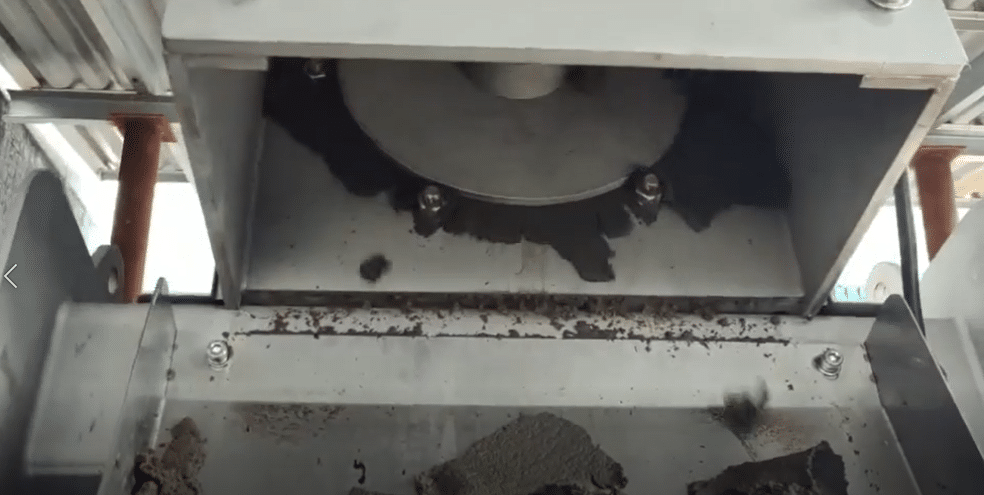
- Cake discharge monitoring
- Daily cleaning
- Maintenance inspection
- Alarm response
Automation helps reduce labor intensity, especially for small and medium wastewater treatment plants where operators manage multiple process units.
Maintenance and Spare Parts
Maintenance cost depends on operating hours, sludge abrasiveness, chemical corrosion, and cleaning discipline.
Common maintenance points include:
- Moving and fixed rings
- Screw shaft
- Drive motor and reducer
- Spray nozzles
- Seals and bearings
- Polymer dosing pump parts
- Sludge feed pump wear parts
A stable feed sludge condition reduces abnormal wear and cleaning frequency.
Sludge Disposal Cost
This is often the most important economic factor. Dewatering reduces sludge volume and weight before transport, landfill, composting, incineration, or drying. The U.S. EPA identifies land application, landfilling, and incineration as common sewage sludge use or disposal routes, which means disposal cost varies by local regulation and final destination.
Even a small improvement in cake dryness can reduce transport and disposal cost significantly over long-term operation.
Simple Screw Press Operating Cost Formula
A practical operating cost estimate can be calculated as:
Daily OPEX = Polymer Cost + Electricity Cost + Wash Water Cost + Labor Cost + Maintenance Cost + Sludge Disposal Cost
For engineering evaluation:
Dry solids load = Sludge flow × Solids concentration
Example:
If sludge flow is 5 m³/h and solids concentration is 2%, then:
5 m³/h × 20 kg/m³ = 100 kg DS/h
This dry solids load is more useful than flow rate alone because two sludges with the same m³/h flow may require very different screw press sizes.
Screw Press Price vs Total Cost of Ownership
A lower initial screw press price does not always mean lower total cost. Buyers should compare the full lifecycle cost.
Lower CAPEX may increase OPEX when:
- The model is undersized
- Polymer mixing is unstable
- Cake dryness is poor
- Wash water demand is high
- Maintenance access is difficult
- Automation is too limited
- Sludge disposal cost remains high
Higher initial investment may be justified when:
- The plant operates 16–24 hours per day
- Labor cost is high
- Sludge disposal cost is expensive
- Stable cake dryness is required
- Remote monitoring is needed
- The system must integrate with a WWTP control room
For EPC projects, the correct screw press selection should be based on sludge testing and full process design, not only equipment price.
Why Cake Dryness Can Matter More Than Machine Price?
| Cake Solids | Wet Cake Produced | Example Disposal Cost |
| 15% | 5.33 t/day | US$373/day |
| 18% | 4.44 t/day | US$311/day |
| 20% | 4.00 t/day | US$280/day |
This is why procurement teams should compare total lifecycle cost, not simply the lowest screw press purchase price.
Sludge disposal requirements also vary by location and final disposal route. For example, the U.S. EPA identifies land application, landfilling and incineration among the principal sewage-sludge management routes in the United States.
What Data Is Needed for a Screw Press Quotation?
To provide a suitable screw press price and operating cost estimate, KUOSI usually needs the following wastewater and sludge data:
- Sludge source
- Sludge flow rate, m³/h
- Solids concentration, % or kg/m³
- Expected operating hours per day
- Sludge temperature
- pH range
- Oil and grease content, if any
- Inorganic solids or abrasive particles
- Required cake moisture or dryness
- Available power supply
- Site layout or installation space
- Disposal method and local transport cost
For industrial sludge, a jar test or pilot test is recommended before final equipment selection.
Summary
Screw press price should be evaluated together with operating cost, including polymer, power, wash water, labor, maintenance, and sludge disposal. For accurate selection, buyers should provide sludge flow rate, solids concentration, sludge source, and required cake dryness.
KUOSI provides complete sludge dewatering solutions, including screw press, polymer preparation system, dosing system, DAF system, and sludge drying equipment. Send us your wastewater or sludge data, and our engineers can recommend a suitable configuration for your project.
Request a quotation, send wastewater data for design, or contact KUOSI for an engineering solution.