
Ozone is a powerful oxidation and disinfection technology widely used in industrial water treatment, wastewater reuse, process water purification, and municipal water applications.
An industrial ozone generator produces ozone (O₃) from oxygen-containing gas through electrical discharge technology. Compared with traditional chemical disinfection methods, ozone treatment provides strong oxidation capability without introducing additional chemical residues into the treated water.

What Is an Industrial Ozone Generator?
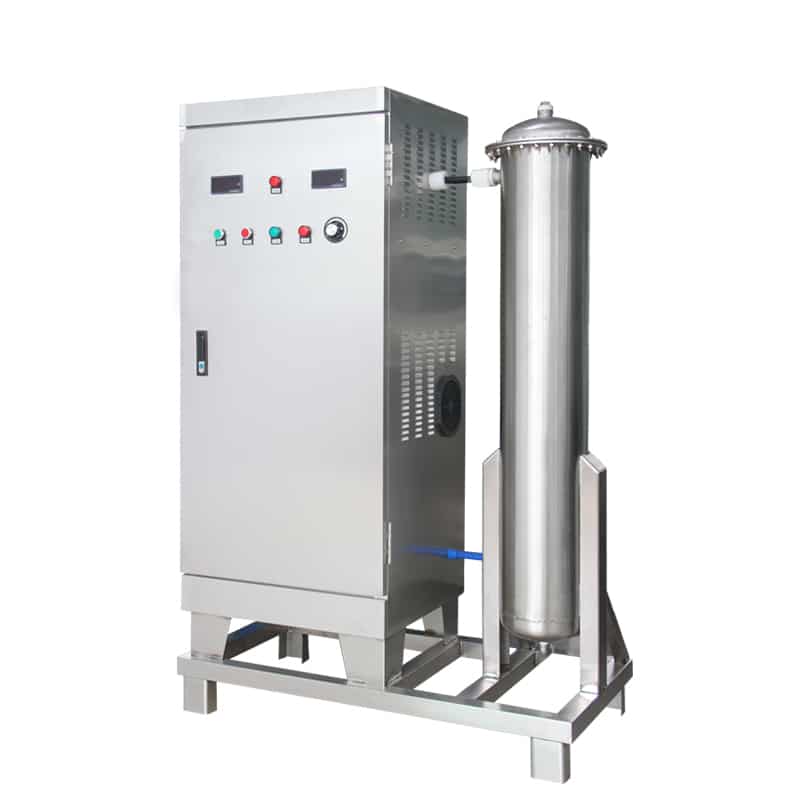
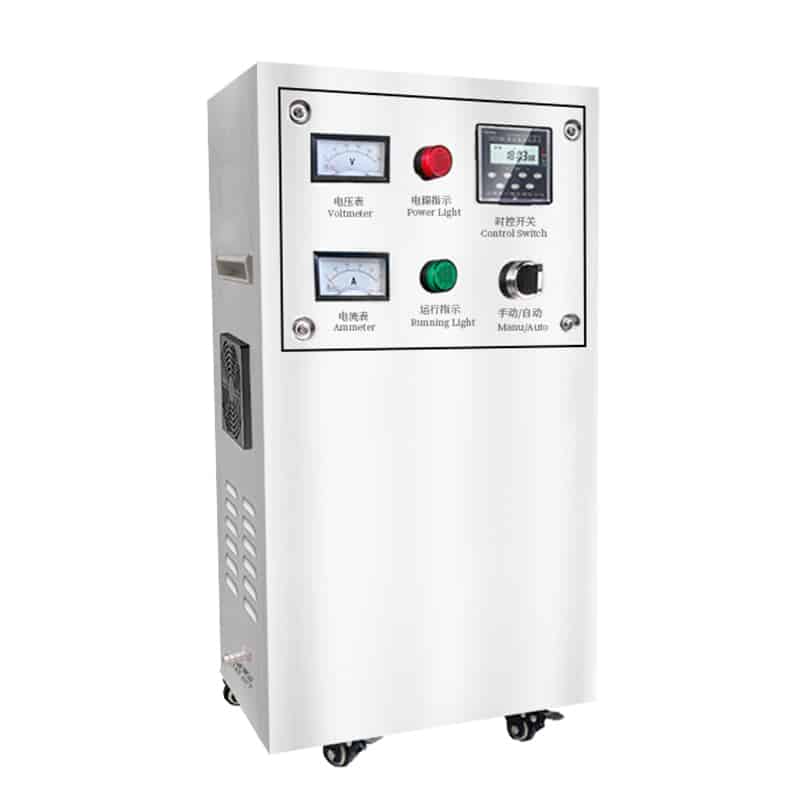
An industrial ozone generator is an equipment system designed to produce ozone gas continuously for large-scale water treatment processes.
The system normally includes:
- Ozone generation unit
- Oxygen or air supply system
- Cooling system
- Electrical control cabinet
- Ozone mixing and injection system
- Off-gas destruction system (if required)
Ozone is generated when oxygen molecules (O₂) are converted into ozone molecules (O₃) under high-voltage electrical discharge.
The basic reaction:
3O₂ → 2O₃
The produced ozone is then transferred into water through an ozone contact system, where it reacts with organic pollutants, microorganisms, color compounds, and other oxidizable substances.
How Does an Industrial Ozone Generator Work?
The ozone generation process generally includes four stages:
Oxygen Preparation
The feed gas can come from:
- Oxygen concentrator
- Liquid oxygen supply
- Dry compressed air system
Dry and clean oxygen improves ozone generation efficiency and reduces equipment maintenance requirements.
Ozone Production
Inside the ozone generator cell, high-voltage discharge creates energy that separates oxygen molecules.
The oxygen atoms then combine with oxygen molecules to form ozone.
Industrial ozone generators require precise control of:
- Gas flow rate
- Power input
- Cooling temperature
- Ozone concentration
Ozone Injection and Mixing
After production, ozone gas must be efficiently dissolved into water.
Common ozone contact methods include:
- Venturi injector systems
- Bubble diffusers
- Static mixers
- Ozone contact tanks
Effective ozone transfer directly affects treatment performance.
Oxidation and Disinfection
Ozone reacts rapidly with:
- Organic compounds
- Bacteria and viruses
- Color-causing substances
- Odor compounds
- Iron and manganese compounds
Because ozone decomposes back into oxygen, it does not leave chlorine-type residual chemicals in treated water.
Industrial Ozone Generator Applications
Industrial ozone systems are widely used in different water treatment industries.
Ozone can be used as an advanced oxidation process (AOP) for:
- COD reduction
- Color removal
- Odor control
- Industrial wastewater polishing
Typical industries include:
- Textile wastewater
- Pharmaceutical wastewater
- Chemical wastewater
- Food processing wastewater
Drinking Water Treatment
Ozone is commonly applied for:
- Disinfection
- Taste and odor removal
- Organic oxidation
- Reduction of micropollutants
Industrial Process Water
Industrial manufacturers use ozone treatment for:
- High-purity water systems
- Cooling water treatment
- Production water recycling
- Equipment sterilization
Aquaculture and Reuse Water
Ozone improves water quality by reducing:
- Organic loading
- Pathogenic microorganisms
- Unwanted color and odor
Industrial Ozone Generator vs Sodium Hypochlorite Generator
| Item | Industrial Ozone Generator | Sodium Hypochlorite Generator |
| Disinfectant produced | Ozone (O₃) | Sodium hypochlorite (NaClO) |
| Generation method | Oxygen/air discharge oxidation | Electrolysis of salt water |
| Oxidation capability | Very high oxidation potential | Strong chlorine-based oxidation |
| Residual disinfectant | No long-lasting residual | Provides chlorine residual |
| Chemical storage | Not required | Not required for on-site generation |
| Raw material | Oxygen or air | Salt + water + electricity |
| Typical application | Advanced oxidation, high-quality water treatment | Continuous disinfection and chlorine control |
| Operation mode | Automatic ozone production and injection | Automatic electrolysis and dosing |
| Main control parameters | Ozone concentration, gas flow, contact time | Available chlorine concentration, dosing rate |
Choosing the right technology depends on water quality, treatment objectives, safety requirements, and project operating conditions.
Key Selection Factors for Industrial Ozone Generators
Before selecting an ozone generator, engineers should evaluate:
Ozone Production Capacity
Usually specified as:
- g/h
- kg/h
The required ozone output depends on:
- Water flow rate (m³/h)
- Pollutant concentration
- Ozone demand
- Contact time
Ozone Concentration
Higher ozone concentration improves oxidation efficiency and reduces gas volume requirements.
Gas Source
The feed gas affects:
- Ozone concentration
- Energy consumption
- Operating cost
Cooling System
Industrial ozone generators require stable cooling because ozone production generates heat.
Automation and Control
Modern ozone systems may integrate:
- PLC control
- Online ozone monitoring
- Flow adjustment
- Remote monitoring
Summary
An industrial ozone generator is an advanced water treatment solution that produces ozone on-site for oxidation, disinfection, and wastewater purification applications. By converting oxygen into ozone through high-voltage discharge technology, ozone systems provide strong oxidation performance for removing organic pollutants, color, odor, and microorganisms without adding chemical residues.
KUOSI provides customized ozone generation solutions for industrial wastewater treatment, process water, municipal water, and water reuse projects. With integrated engineering design, automatic control options, and application-based selection, our ozone systems help EPC contractors, industrial plants, and water treatment companies achieve efficient, reliable, and sustainable treatment performance.
For an accurate ozone system design, send wastewater data for design and contact KUOSI engineering team for a customized solution.