
Often, the incoming water appears clear, yet the RO membranes clog frequently. The cause is rarely turbidity, but rather the SDI (Silt Density Index). As a key parameter for measuring colloidal contamination levels, the SDI determines whether your membranes will last three years or just three months. Today, let’s take three minutes to fully understand this “make-or-break” factor in water treatment.
What is SDI?
SDI is a commonly used parameter in the water treatment industry to assess the potential risk of membrane fouling caused by suspended particles and colloidal substances in water. It is primarily used to monitor the quality of feedwater entering reverse osmosis (RO) or nanofiltration (NF) systems.
The Testing Principles of SDI
SDI testing typically uses a 0.45 μm microporous filter membrane and is conducted at a constant pressure (generally 30 psi / 207 kPa). The pollution index of the water sample is calculated by measuring the rate at which the filter membrane becomes clogged over a specific period of time.
The typical test durations are:
- SDI₅ (5 minutes)
- SDI₁₅ (15 minutes, most commonly used)
Typical SDI Standards
| SDI Value | Water Quality Status | Impact on RO System |
| < 3 | Excellent | Highly suitable for RO systems; minimal fouling risk. |
| 3-5 | Acceptable | Moderate fouling potential; requires regular monitoring. |
| >5 | Poor / High Risk | Likely to cause severe membrane fouling; Not Recommended. |
Table of Typical SDI Standards
The Role of SDI in Water Treatment
- Evaluate the quality of reverse osmosis feedwater
- Assess the efficiency of the pretreatment system
- Monitor the performance of the filtration system
- Predict the risk of membrane fouling
How should SDI be handled?
Coagulation & Flocculation
The first step in reducing SDI is typically to remove fine particles and colloidal matter from the water through chemical coagulation and flocculation. By adding coagulants (such as PAC or ferric sulfate) to the water, the fine particles are destabilized and form larger flocs.
Common Equipment:
- Chemical Dosing System
Used to precisely dose coagulants and flocculants to improve particle aggregation efficiency. - Static Mixer / Mechanical Mixer
Used to rapidly disperse chemicals, ensuring thorough reaction with water. - Flocculation Tank
Through gentle agitation, particles are formed into larger flocs, facilitating subsequent separation.
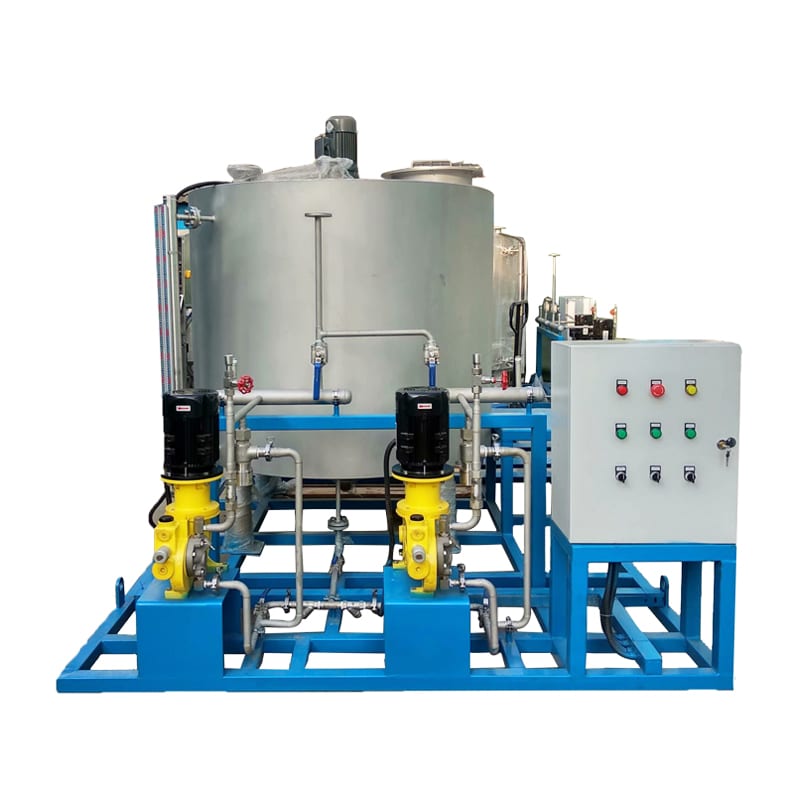
Solid-Liquid Separation
After floc formation, suspended particles must be removed using solid-liquid separation equipment.
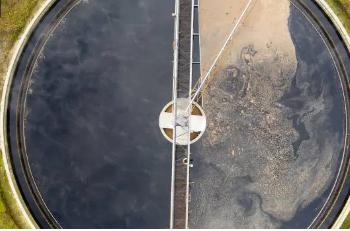
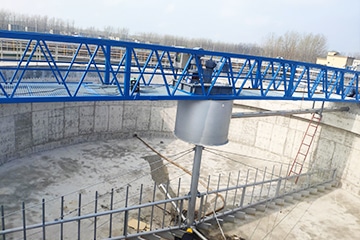
Sedimentation
Conventional sedimentation tanks utilize gravity to cause flocs to settle, thereby reducing the concentration of suspended solids in the water.
Common Equipment:
- Sedimentation Tank (Clarifier)
- Sludge Scraper
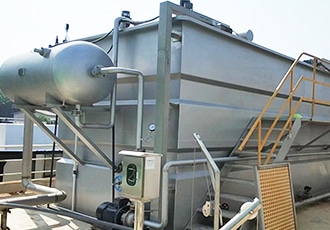
Dissolved Air Flotation (DAF)
- For lighter particles or colloidal contaminants, the DAF (Dissolved Air Flotation) system is a more efficient method. Microbubbles attach to the particle surfaces, causing them to float to the surface where they are skimmed off.
Filtration
Filtration is a critical step in reducing SDI, especially before the water enters the RO system.
Multimedia Filter
Uses filtration media such as quartz sand and anthracite to remove suspended particles from the water.
Common Equipment:
- Multimedia Filter
- Sand Filtration System
- Cartridge Filtration
Membrane Filtration
In some high-performance systems, ultrafiltration (UF) membrane systems are used as pretreatment for RO to further reduce the SDI.
Common Equipment:
Ultrafiltration (UF) System
This method can reduce the SDI value to below 1, significantly lowering the risk of membrane fouling.
The Difference Between SDI and Turbidity
In water treatment systems, both the Silt Density Index (SDI) and turbidity are important parameters for assessing water quality, but they reflect different water quality characteristics and are measured using different methods. Simply put, turbidity primarily indicates the clarity of water, while the SDI is used to assess the potential risk of membrane system fouling caused by particulate matter in the water.
| Parameter | Description | Unit | Typical Applications |
|---|---|---|---|
| Turbidity | Measures the level of suspended particles affecting water clarity | NTU | Drinking water treatment, wastewater treatment |
| SDI | Evaluates the potential of particulate fouling on membrane systems | — | Reverse osmosis (RO), nanofiltration (NF) systems |
Table of the Difference between SDI and Turbidity
Conclusion
Measurement alone is meaningless; effective preprocessing is what really matters. In addition to the core pretreatment equipment, effective SDI control may also involve supporting systems such as filter press, paddle dryer, and aeration blower, ozone on the specific water conditions and treatment objectives
If you are looking to improve your pretreatment performance and extend membrane lifespan, KUOSI can provide the right equipment and technical support for your application.