
Under today’s stringent environmental regulations, wastewater treatment no longer settles for merely meeting basic biochemical standards. As the “final filter” in water treatment, one of the core tasks of tertiary treatment is to reduce total phosphorus (TP) to extremely low levels. Phosphorus removal is not merely a chemical reaction; it is a precise interplay of process synergy and equipment performance.
The Real Nature of Phosphorus in Wastewater
In many regions, discharge limits for Total Phosphorus (TP) have tightened to:
- ≤ 0.5 mg/L (Standard discharge)
- ≤ 0.3 mg/L (Sensitive water bodies)
- ≤ 0.1 mg/L (Reuse or advanced treatment)
In activated sludge systems, phosphorus exists in three main forms:
- Dissolved orthophosphate
- Organic-bound phosphorus
- Intracellular polyphosphate
Regardless of the pathway, phosphorus can only be permanently removed when it leaves the system as wasted sludge.

Why does phosphorus in wastewater cause problems?
1. Triggering “water eutrophication”
Phosphorus is a limiting nutrient for aquatic plants, particularly algae. In nature, phosphorus levels are typically low, which restricts excessive algal growth.
- Explosive Growth: Once large amounts of phosphorus from wastewater enter lakes or rivers, algae receive a “super fertilizer” boost, rapidly proliferating to form green or red tides.
- Blocking Sunlight: Dense algae mats covering the water surface prevent sunlight from reaching deeper waters, causing submerged plants to die from inability to perform photosynthesis.
2. Causing Water Hypoxia
- Oxygen-consuming decomposition: Bacteria consume large amounts of dissolved oxygen (DO) while decomposing these dead algae.
- Biological die-off: When oxygen in the water is depleted, fish, shrimp, and other aquatic organisms suffocate and die en masse, forming “dead zones.”
3. Produce Biological Toxins
Certain types of algae, such as cyanobacteria, produce algal toxins in eutrophic environments.
- Drinking Water Safety: These toxins are difficult to completely remove through conventional municipal water treatment processes, posing a threat to human drinking water safety.
- Ecological Chain Disruption: Toxins accumulate in fish and shellfish, endangering higher-level organisms through the food chain.
4. Increase Water Treatment Costs And Complexity
For enterprises or municipal water treatment plants requiring reclaimed water, high phosphorus content imposes additional operational burdens:
- Membrane System Fouling: In tertiary treatment, phosphates readily bind with calcium and magnesium ions, forming phosphate scale on reverse osmosis (RO) membranes and causing reduced membrane flux.
- Process intervention: To remove phosphorus, significant amounts of chemical reagents (such as PAC and ferrous sulfate) must be added. This not only increases chemical costs but also generates large volumes of chemical sludge, adding expenses for dewatering and disposal.
How to remove phosphorus from wastewater?
Phosphorus removal from wastewater typically does not rely on a single filtration process, but rather involves a sequence of chemical precipitation followed by physical separation.
Chemical Precipitation
This is the primary method for treating industrial wastewater and tertiary treatment. Phosphates dissolved in water cannot be directly filtered and must be made visible through chemical dosing. The conventional iron-phosphate molar ratio is controlled between 1.5–2.5.
Principle: Metal salts (such as polyaluminum chloride PAC, ferrous sulfate, or ferric chloride) are added to the wastewater. The metal cations react chemically with phosphate ions to form insoluble metal phosphate precipitates.

Overdosing increases sludge production by 20–40%.
Equipment Requirement Recommendations:
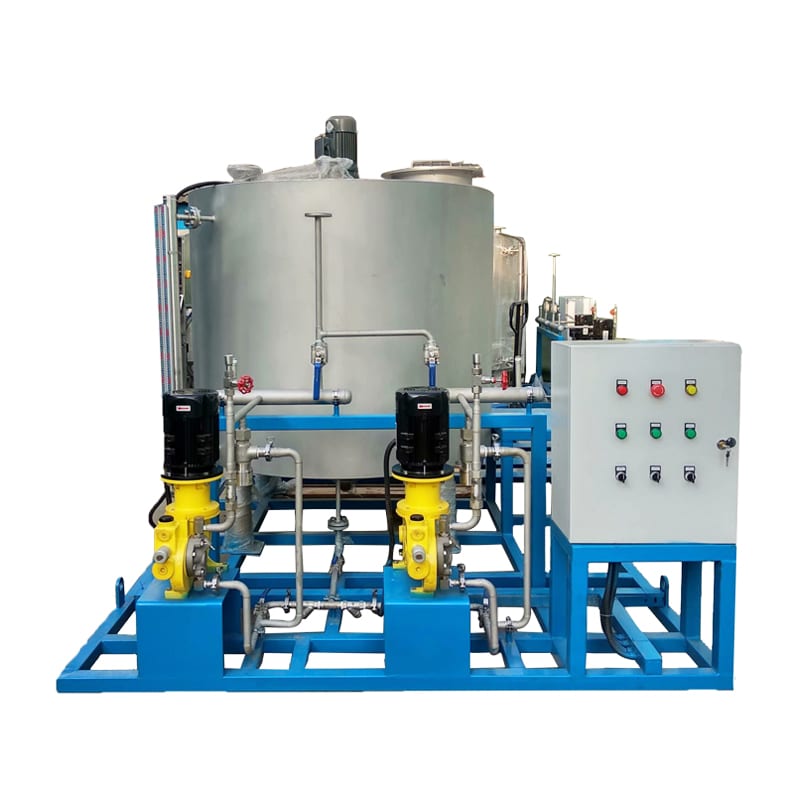
- Automatic Chemical Dosing System: KUOSI chemical dosing system precisely controls chemical dosage ratios.
- High-Energy Mixer: Ensures instantaneous and thorough mixing of chemicals with wastewater.
Electrochemical Biological Phosphorus Removal (EBPR)
This is a commonly used low-cost method for municipal wastewater treatment plants (secondary treatment).
Principle: Utilizing the physiological characteristics of polyphosphate-accumulating organisms (PAOs). Under anaerobic conditions, PAOs release phosphorus stored within their cells. Upon entering aerobic environments, they “retaliate” by excessively absorbing phosphorus from the water and storing it internally. Finally, phosphorus removal is achieved by discharging the “excess sludge” containing these bacteria.

Equipment Requirements:
- Submersible Mixer: Maintains sludge suspension in the anaerobic tank.
- Microporous Aeration System: Provides ample oxygen to the aerobic tank.
High-Efficiency Solid-Liquid Separation
Whether through chemical precipitation or biological absorption, phosphorus ultimately forms solid flocs suspended in water. If separation is incomplete, phosphorus will be carried out with the effluent, leading to exceedances.
Option A: DAF Dissolved Air Flotation
For tertiary treatment, the flocs produced by chemical phosphorus removal are extremely fine and lightweight, making them difficult to capture in gravity sedimentation tanks.
- How to operate: Utilize microbubbles generated by DAF flotation to lift phosphorus flocs to the water surface.
- Expert technique: Implement high-frequency thin skimming via an automated control system to maintain scum thickness between 5-8 cm. This effectively prevents phosphorus from redissolving back into the water within the anoxic scum layer.
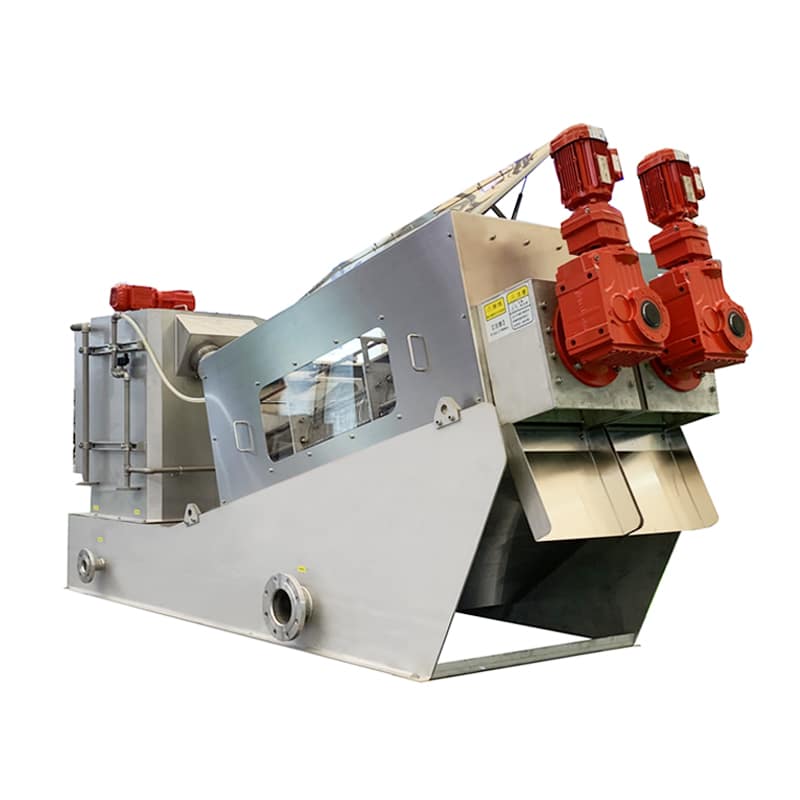
Option B: Screw-type Sludge Dewatering Machine
The separated phosphorus-containing scum and residual sludge must be dewatered into sludge cakes and completely removed from the water system.
- Advantage: Kuosi screw presses convert liquid sludge into dry sludge cakes through compression by the spiral shaft and moving/stationary rings.
- Key Value: Screw presses not only achieve high dewatering efficiency but also produce filtrate with low phosphorus content, preventing phosphorus from circulating within the treatment system.
Hidden Risks
- Excess chemical dosing
- Poor skimming control
- High phosphorus in filtrate
- Sludge retention imbalance
The “Waterloo” of pH and Alkalinity
In tertiary chemical phosphorus removal processes, many projects focus solely on the Fe/P dosage ratio while overlooking a critical hidden variable that determines success or failure—pH and system alkalinity.
When iron or aluminum salts are added for phosphorus removal, hydrogen ions are released during the reaction, consuming system alkalinity and causing pH to drop. If the influent alkalinity is insufficient or not monitored and controlled, the following issues may arise:
- pH deviates from optimal reaction range
- Floc formation becomes unstable
- Chemical dosage continues to increase
- Effluent TP fluctuates
This issue is particularly pronounced in industrial wastewater or water with low alkalinity. Without timely replenishment of alkaline sources or implementation of automated control, the situation can easily spiral out of control.
Conclusion
hosphorus removal in tertiary treatment is a precision engineering process combining chemistry, separation, and sludge management.
KUOSI specializes in comprehensive solutions for advanced industrial and municipal wastewater treatment systems, with proven engineering expertise in tertiary enhanced phosphorus removal. For front-end pretreatment and overall process stability, KUOSI integrates equipment including screens, grit classifier, aeration blowers, disinfection systems, SBR decanters, and sludge filter presses to ensure a closed-loop control system from influent to sludge cake output. Contact us to customize your next water treatment solution!