Turbo Blower


High speed air suspended turbo centrifugal blowers are simple in construction and functional principle, but at the same time very efficient. Since the air supply systems of modern wastewater treatment plants are designed for maximum availability, high energy efficiency and long maintenance intervals, the blowers have a demanding bearing system inside that requires neither oil nor other lubricants – only air is required.
Combining an advanced blower management system with a smaller physical footprint than conventional blowers, and a huge increase in redesign, performance and efficiency.
Incorporates innovative and advanced technology that provides up to 45% energy savings, increased reliability and low maintenance requirements, and is factory pre-wired and tested in an ergonomically designed acoustic enclosure for plug-and-play operation.
How does turbo blower work?
Air suspension centrifugal turbo blower is a new concept blower developed by applying the design experience of military aviation turbomachinery. Its basic principle is that the high-speed permanent magnet synchronous motor supported by air suspension bearing and controlled by frequency converter directly drives the coaxial centrifugal impeller to do work, which creates a new era of ultimate energy saving and environmental protection fan.
The high-speed turbo blower follows the compression principle of a centrifugal compressor or a dynamic compressor of radial design. It operates at constant pressure, with performance dependent on external environmental conditions, providing pulsation-free compressed air. This is in contrast to a volumetric compressor operating at a constant flow rate, where the inlet air density does not affect performance and the compression is pulsating.
Air enters the impeller axially. The high-speed motor drives the impeller, which adds energy to the air and increases its pressure and velocity. The diffuser converts part of the air’s kinetic energy into static pressure, and the volute casing collects the flow and directs it to the outlet. The blower must operate within the airflow and pressure limits shown on its performance map. Efficiency depends on the operating point and the ratio of useful compression power to input power.
Surge is an unstable low-flow operating condition in a centrifugal blower. Pressure and flow can oscillate, and the flow may reverse, causing vibration and possible damage. The control system keeps the operating point away from the surge limit using the speed and blow-off or bypass controls provided for the selected model.
Choke is the high-flow limit of a centrifugal blower at a given speed. As flow increases, the air can reach sonic conditions in a limiting passage, restricting further increases in mass flow. Blower selection and control must account for both the surge and choke limits.
Features
- Simple maintenance / low cost — using air suspension bearing technology, no need to use lubricant and regular bearing replacement, only regular filter replacement.
- Compact structure — simple structure, small size, light and delicate, reduce space, easy to move and install.
- Easy to use and control — Motor speed, pressure, temperature and flow rate are displayed on the touch screen, and data can be changed and entered through the touch screen, making it easy to use.
- High efficiency and energy saving — (energy saving effect can reach 45%) The compression part adopts high efficiency design and high efficiency motor, the comprehensive efficiency can reach more than 70%.
- Low noise, no vibration — using air bearing direct drive technology, no mechanical wear, noise is only about 75dB(A), product vibration is basically ZERO level.
- Oil-free operation — Adopting air foil bearing, no lubrication The air supplied is pure air without oil. The air supplied is pure air that does not contain oil.
Applications
- Sewage treatment industry
- Pulp and paper industry
- Printing and dyeing industry
- Chemical
- The pharmaceutical
- Electroplating factory
Customer site cases


Video
FAQ
Popular articles
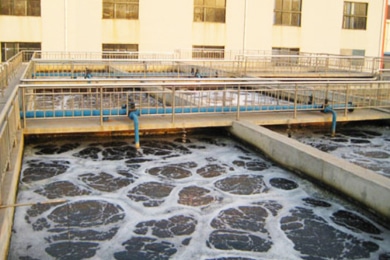
What is An Aeration Tank & What Does It Do?
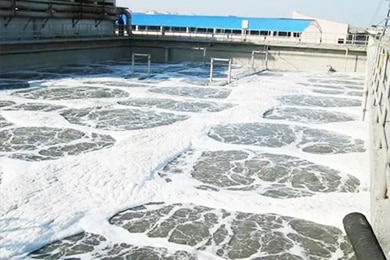
Effect of Over Aeration of Activated Sludge
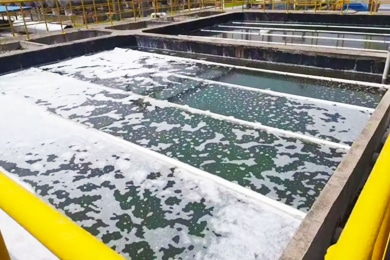
Aerobic Digestion in Wastewater Treatment

What is Activated Sludge?
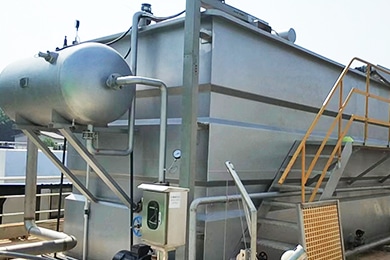
Dissolved Air Flotation
Sewage Sludge Overview

Industrial Waste Water
Sludge Tanks Overview
Disposal Waste Water
Types of Wastewater
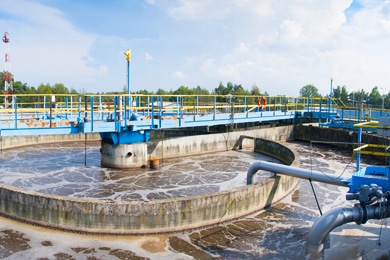
What is Anaerobic Wastewater Treatment?
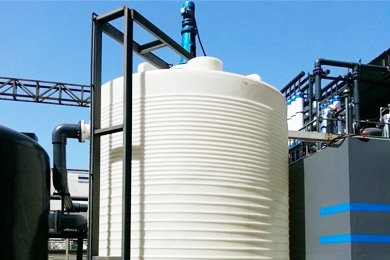
Waste Water Treatment Tanks